If you grew up shopping for TVs, stereos, or your first computer sometime between the 1980s and mid-2000s, there’s a good chance you walked through the doors of a Circuit City. These sprawling electronics superstores were a treasure trove for tech enthusiasts, showcasing the latest gadgets and appliances amid a vibrant display of neon lights and the buzz of excited shoppers.
The thrill of browsing the aisles, testing out the newest sound systems, or debating the merits of different flat-screen models was a rite of passage for many. As you wandered through, the knowledgeable staff were always on hand, eager to help you navigate the ever-evolving landscape of consumer electronics, turning what could be an overwhelming experience into an adventure of discovery.
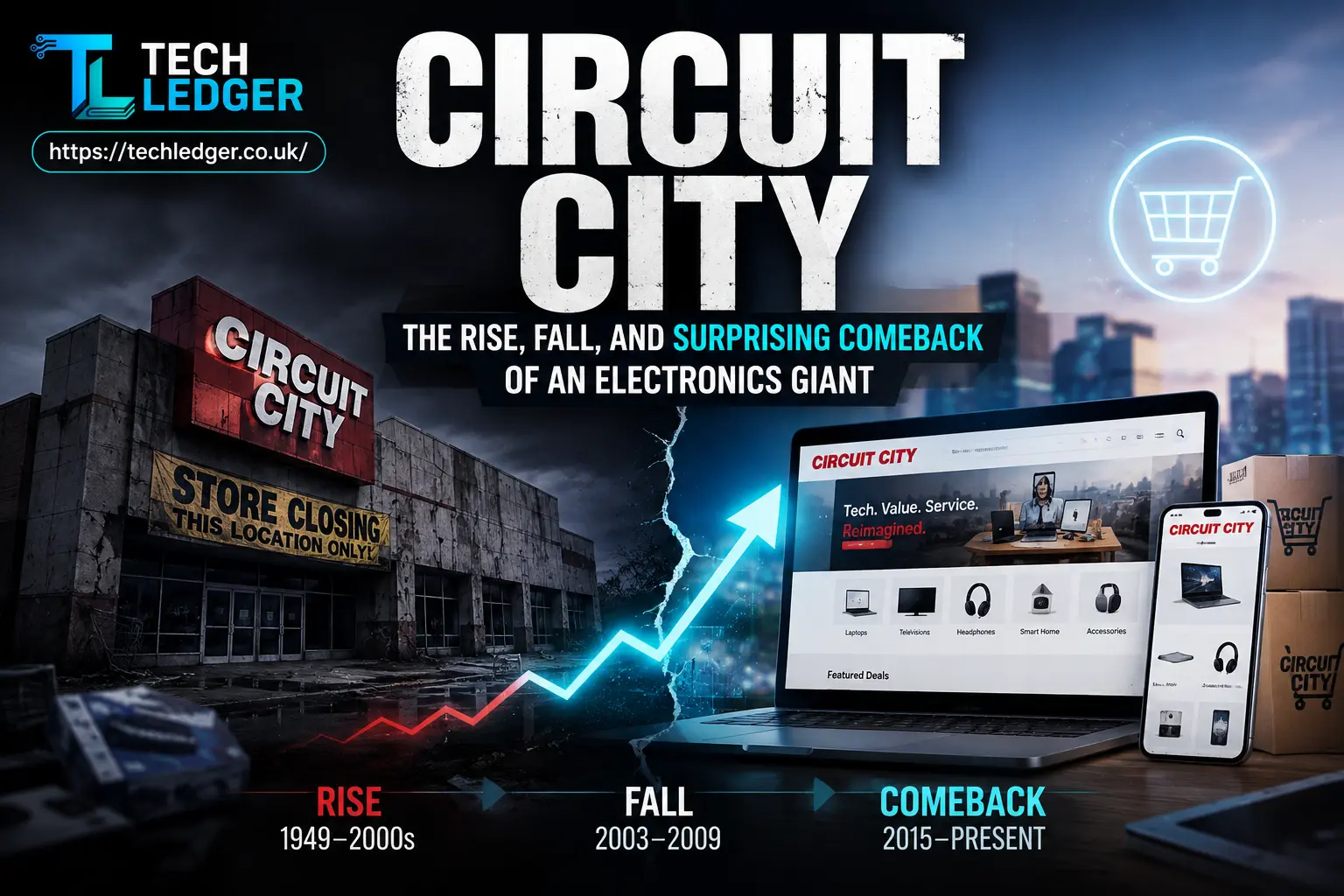
The name still carries a strange kind of nostalgia a mix of fond memories and cautionary-tale energy. For over a decade, Circuit City has occupied a strange space in American retail history: a brand that was once a household name, disappeared almost overnight, and has spent the years since trying, in fits and starts, to claw its way back.
This article walks through the full story of Circuit City how it became a retail powerhouse, why it collapsed so dramatically, and where the brand actually stands today. Along the way, we’ll look at what other businesses can learn from its mistakes, because few corporate downfalls offer as many teachable moments as this one. To understand Circuit City’s rise, we must first explore its origins in the 1940s, when it began as a small radio and appliance store in Richmond, Virginia. Over the decades, the company evolved, adapting to the changing landscape of consumer electronics and expanding its footprint across the United States.
By the 1980s and 1990s, Circuit City had established itself as a leader in the retail market, renowned for its knowledgeable staff and extensive product range. However, as the retail environment shifted with the advent of online shopping and fierce competition from rivals like Best Buy, Circuit City struggled to innovate and keep pace, setting the stage for its eventual decline. This article will delve into the series of strategic missteps that led to its fall from grace and examine how other companies can avoid similar pitfalls in an ever-evolving marketplace.
A Quick Snapshot of Circuit City
| Detail | Information |
|---|---|
| Founded | 1949, Richmond, Virginia |
| Founder | Samuel Wurtzel |
| Original Name | Wards Company |
| Peak Store Count | Over 1,500 locations across the U.S. and Canada |
| Bankruptcy Filed | November 2008 |
| Final Store Closures | March 2009 |
| Brand Revived By | Ronny Shmoel and Albert Liniado (2015 onward) |
| Current Status | Operating as an e-commerce brand under new ownership |
How Circuit City Started
Circuit City’s roots go back further than most people realize. The company began life in 1949 as a small Richmond, Virginia storefront selling one of the hottest new gadgets of the era: television sets. As demand for televisions surged, the store quickly expanded its inventory to include a wide array of consumer electronics, establishing itself as a go-to destination for the latest innovations.
By the 1960s, Circuit City had evolved into a chain, adopting a more sophisticated retail model that focused on customer service and expert advice, which set it apart from competitors. This strategic shift not only captured the burgeoning market but also laid the groundwork for what would become a significant player in the electronics industry. As technology advanced, so too did Circuit City’s offerings, from audio equipment to computers, each new product reflecting the changing landscape of consumer desires and technological capabilities.
Founder Samuel Wurtzel had a knack for spotting where consumer demand was heading, and as televisions went from novelty to necessity in American households, his single store grew into a regional chain.
Over the following decades, the business evolved and rebranded, eventually adopting the Circuit City name that would become instantly recognizable by the 1980s. The company leaned into the “big box” retail format before that term was even common enormous, warehouse-style stores stacked with TVs, stereo systems, computers, and eventually video game consoles and home appliances. It was a formula that worked spectacularly well for a long time.
The Beginning of the Decline
Every retail collapse has a mix of internal missteps and external pressure, and Circuit City is a textbook case of both.
The commission decision. One of the most cited turning points came in 2003, when Circuit City eliminated its commission-based pay structure for sales staff and laid off roughly 3,900 experienced salespeople, replacing many of them with lower-paid hourly workers. On paper, this saved the company an estimated $130 million a year. In practice, it stripped stores of the product-knowledgeable staff that had been a competitive advantage over big-box rivals. Customers noticed the drop in service quality almost immediately.
Turning down a buyout. That same year, Circuit City rejected a $1.5 billion buyout offer from CompUSA — a decision that, in hindsight, looks like a missed opportunity to exit at a strong valuation before the harder years ahead.
Losing ground to Best Buy. While Circuit City was cutting costs and struggling with service, Best Buy was investing in store experience, expanding aggressively, and building stronger vendor relationships. Circuit City’s real estate also worked against it many stores were aging and located in less desirable spots compared to Best Buy’s newer, better-positioned locations.
The 2008 financial crisis. By the time the Great Recession hit, Circuit City was already weakened. Consumer electronics spending is highly discretionary, and it’s one of the first categories shoppers cut back on when money gets tight. The combination of a bloated real estate footprint, mounting debt, and collapsing consumer demand proved fatal.
Circuit City filed for Chapter 11 bankruptcy protection in November 2008. Attempts to find a buyer or restructure the business failed, and in January 2009 the company announced it would liquidate entirely. The last Circuit City store closed its doors on March 8, 2009. More than 30,000 employees lost their jobs, and Circuit City became and remains one of the largest single retail liquidations in U.S. history.
What Happened to the Brand After 2009
Here’s where the Circuit City story gets more interesting than most people realize. The name didn’t vanish completely it just went into a strange kind of limbo.
Electronics retailer Systemax acquired the Circuit City brand name and trademarks out of bankruptcy and briefly operated CircuitCity.com as an online-only store between 2009 and 2012. After that, Systemax folded the site into its TigerDirect brand, and the Circuit City name effectively went dormant. TigerDirect itself eventually shut down in 2023.
In October 2015, entrepreneur Ronny Shmoel purchased the Circuit City brand name, domain, and associated trademarks, setting off a series of comeback attempts that have played out publicly ever since.
The Comeback Attempts: A Long, Bumpy Road
Reviving a dead retail brand is far harder than buying the rights to its name, and Circuit City’s relaunch has been a case study in delayed timelines and shifting strategy.
- 2016: Shmoel and business partner Albert Liniado announced ambitious plans to reopen physical stores, starting in the Dallas area, with talk of 50 to 100 locations and even a longer-term vision of over a thousand stores within five years. A prototype store was reportedly close to opening, but the launch was pulled back at the last minute so the team could “get it right.”
- 2018: At CES in Las Vegas, Circuit City’s new leadership unveiled a fresh plan: a relaunched e-commerce site powered by IBM Watson’s AI technology, followed eventually by kiosks, store-within-a-store concepts, and full showrooms. The website launch, originally set for February 15, was delayed almost immediately due to an unexpectedly high volume of pre-launch traffic a strange problem to have, but a delay nonetheless.
- More recent years: The brand has continued to resurface periodically in retail news, with reports of renewed plans for both an updated e-commerce presence and physical retail formats, echoing the smaller, experience-focused store concepts pioneered by other revived brands like RadioShack.
What’s notable is the pattern: enthusiasm and press coverage tend to spike around each announcement, followed by quiet delays. That’s not necessarily a red flag building a retail brand back from zero, especially in a market now dominated by Amazon and a much-strengthened Best Buy, is genuinely difficult. But it does mean anyone searching for “Circuit City” today is likely to find a brand that exists in an ongoing, evolving state rather than a fully rebuilt national chain.
Where Circuit City Stands Today
As of now, Circuit City operates primarily as an e-commerce electronics retailer under Shmoel’s ownership, selling consumer electronics online rather than through the sprawling network of superstores it once had. The company has floated brick-and-mortar plans multiple times over the past several years, but a full-scale return to physical retail on anything close to its former footprint hasn’t materialized.
If you’re looking to shop with the current Circuit City, it’s worth going directly to the official site rather than relying on old store locations or outdated directory listings plenty of “Circuit City” listings still floating around online (on sites like Yelp) are simply archived pages for stores that closed back in 2009.
Why Circuit City’s Story Still Matters
Business schools still reference Circuit City as a cautionary example, and honestly, it deserves the attention. A few takeaways stand out:
- Cutting frontline expertise to save money can backfire. The 2003 layoffs of commissioned salespeople saved money short-term but eroded the in-store experience that differentiated Circuit City from cheaper online competitors.
- Brand recognition alone doesn’t guarantee survival. Circuit City had massive consumer awareness even after it closed — but recognition without trust, convenience, and competitive pricing isn’t enough to rebuild market share.
- Timing and execution matter more than ambition. Multiple comeback plans have been announced with big numbers attached — dozens or even a thousand-plus stores but execution has consistently lagged behind announcements. That gap between ambition and delivery is a lesson for any brand relaunch, not just retail.
- Real estate decisions carry long-term consequences. Locking into large, aging superstore leases limited Circuit City’s flexibility right when the market needed it to adapt quickly.
My Take
Having followed retail turnarounds for a while, I think Circuit City’s comeback is a genuinely interesting experiment, even if it hasn’t (yet) recaptured its old scale. The smartest move the current ownership has made is resisting the urge to instantly recreate the 33,000-square-foot superstore model that format is largely what killed the original company, given how much fixed cost it required in an era when online shopping was eating into foot traffic. A smaller, more experience-driven store format, paired with a modern e-commerce backbone, makes far more sense in today’s retail environment. This pivot not only reflects a keen understanding of current consumer behaviors but also allows for adaptive inventory management and a more personalized shopping experience.
By focusing on curated product selections and interactive displays, Circuit City can engage customers in a way the larger stores could not, fostering a sense of community and brand loyalty. Furthermore, integrating technology such as augmented reality to showcase products or AI-driven recommendations could enhance the in-store experience, drawing in tech-savvy shoppers who crave innovation. If executed well, this strategy could position Circuit City as a leader in the evolving landscape of retail, where agility and customer connection are paramount.
That said, brand nostalgia can only carry a relaunch so far. Circuit City’s biggest challenge isn’t getting people to remember the name it’s getting them to choose it over Amazon’s convenience and Best Buy’s now-solid in-store experience. Whether the brand ever returns to physical stores at meaningful scale remains genuinely uncertain, and I’d treat any specific store-opening announcement with a healthy dose of patience until it’s actually confirmed on the ground.
Frequently Asked Questions
Is Circuit City still in business?
Yes, in a limited form. The brand operates as an online electronics retailer under new ownership after the original company liquidated all its physical stores in 2009.
Why did Circuit City go out of business?
A combination of factors caused its collapse, including the elimination of commissioned sales staff in 2003, increasing competition from Best Buy, outdated store locations, heavy debt, and the impact of the 2008 financial crisis on discretionary consumer spending.
Who owns Circuit City now?
Entrepreneur Ronny Shmoel, along with business partner Albert Liniado, acquired the Circuit City brand name and trademarks in 2015 and has led various relaunch efforts since then.
Will Circuit City open physical stores again?
There have been multiple announcements over the years about opening smaller-format physical stores, kiosks, and showrooms, but as of now the brand’s primary presence remains online. Any new store openings should be verified through official company announcements.
Read Also: Quotela.net Review 2026: The Hidden Downsides of This Quote & Lifestyle Blog
About the Author