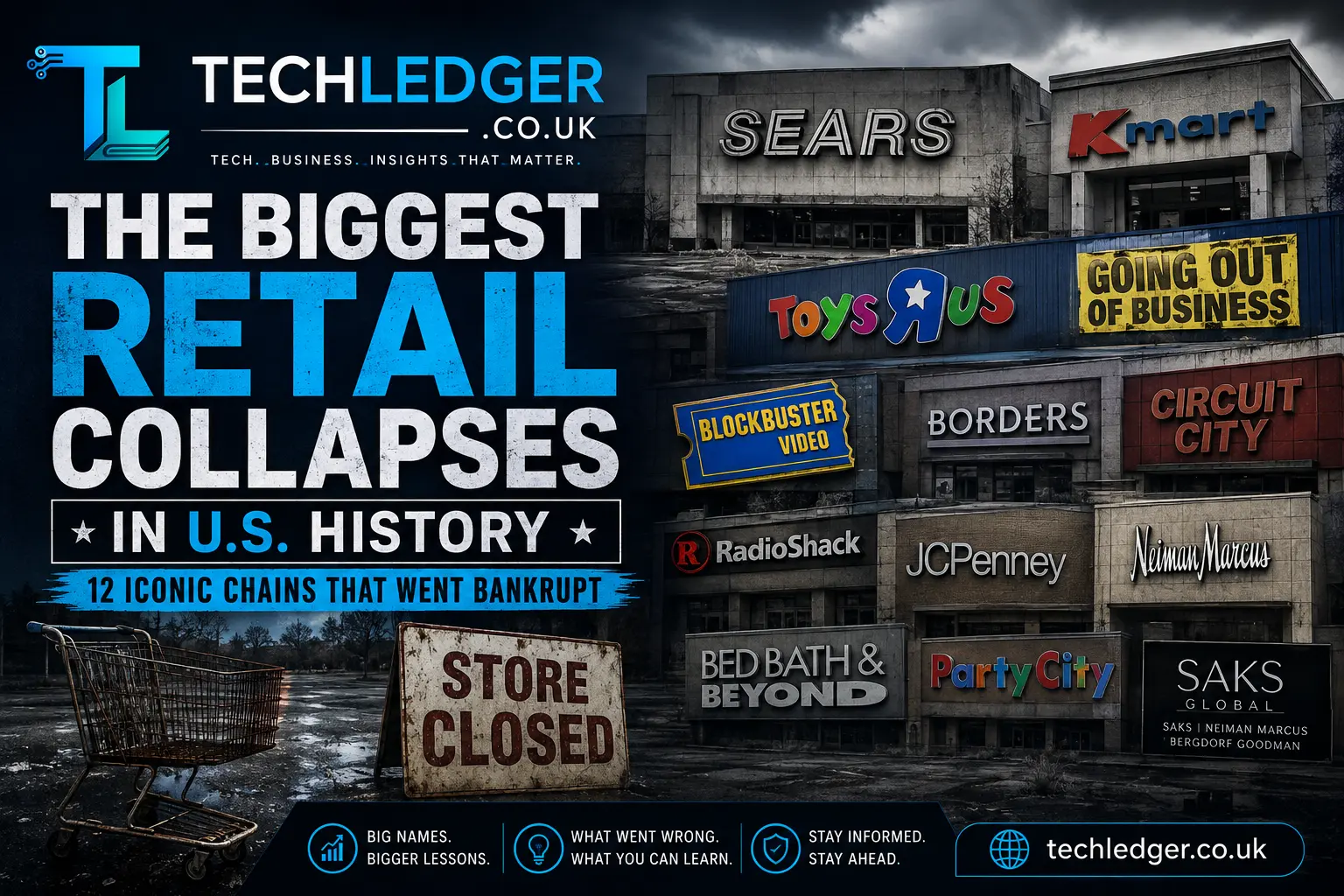
Walk through almost any aging American mall today and you’ll see the ghosts of retail history dark storefronts where Sears, Toys R Us, or RadioShack used to be. These weren’t small, forgettable businesses. They were once household names that shaped how generations of Americans shopped, played, and furnished their homes. And yet, one by one, they collapsed.
The biggest retail collapses in U.S. history didn’t happen overnight. They were slow-motion failures years in the making, driven by debt, denial, and a refusal to adapt. Understanding why these giants fell isn’t just a nostalgic exercise it’s one of the best case studies in business survival you’ll ever find. These retail titans often ignored the shifting tides of consumer behavior, clinging to outdated business models while competitors embraced innovation. The rise of e-commerce, for instance, wasn’t merely a passing trend; it redefined the very landscape of shopping.
Companies that failed to recognize the importance of an online presence or underestimated the convenience of home delivery found themselves facing dwindling foot traffic and, ultimately, insolvency. Each misstep, compounded by a lack of foresight and an unwillingness to pivot, painted a stark picture of vulnerability in an industry that many once deemed invincible. As we dissect these failures, we uncover critical lessons in agility, foresight, and the relentless pursuit of relevance elements that are essential not just for survival, but for thriving in an ever-evolving marketplace.
In this article, we’ll walk through the most significant retail bankruptcies in American history, what caused each one, and the practical lessons hiding inside every failure. From the downfall of iconic brands like Sears and Toys “R” Us to the more recent struggles faced by department stores, each case offers unique insights into the shifting landscape of consumer behavior and economic pressures.
We’ll begin by examining the rise and fall of these retail giants, considering factors such as changing shopping habits, the impact of e-commerce, and mismanagement strategies that ultimately led to their demise. By understanding these narratives, we can glean valuable lessons on resilience, adaptation, and the importance of innovation in an ever-evolving marketplace.
Why Do Big Retailers Collapse in the First Place?
Before diving into specific companies, it helps to understand the pattern. Almost every major retail collapse in the U.S. shares a handful of root causes:
- Crushing debt from leveraged buyouts. Many retailers were bought out by private equity firms that loaded them with debt, leaving little room to invest in stores or technology.
- Failure to adapt to e-commerce. Companies that treated online shopping as a side project instead of the future got left behind by Amazon and other digital-first competitors.
- Overexpansion. Some chains opened too many stores too fast, then couldn’t sustain the overhead when consumer habits shifted.
- Changing consumer behavior. Shoppers moved toward convenience, value, and experience and companies that didn’t evolve their store experience paid the price.
- Landlord and real estate pressure. Long-term leases on massive stores became financial anchors once foot traffic declined.
With that context, let’s look at the biggest names that fell.
The Biggest Retail Collapses in U.S. History (At a Glance)
| Retailer | Bankruptcy Year | Peak Store Count | Primary Cause |
|---|---|---|---|
| Sears | 2018 | ~3,500 | Decades of decline, underinvestment, debt |
| Kmart | 2002 | ~2,100 | Poor management, Walmart/Target competition |
| Toys R Us | 2017 | ~800+ | $2.5B leveraged buyout debt |
| Circuit City | 2008 | ~700 | Layoffs of top staff, Best Buy competition |
| Borders | 2011 | ~650 | Ignored e-commerce, outsourced online sales to Amazon |
| RadioShack | 2015 (2nd: 2017) | ~7,000 | Outdated product mix, brand confusion |
| Blockbuster | 2010 | ~9,000 | Netflix and streaming disruption |
| JCPenney | 2020 | ~850 | Pandemic, debt, declining mall traffic |
| Neiman Marcus | 2020 | ~40 | Leveraged buyout debt, pandemic |
| Bed Bath & Beyond | 2023 | ~950 | Supply chain issues, lost brand identity |
| Party City | 2023 & 2025 | ~800 | Helium shortages, debt, weak e-commerce |
| Saks Global (Saks/Neiman Marcus/Bergdorf) | 2026 | Combined luxury network | Merger debt, luxury spending slowdown |
Now let’s break down the stories behind the numbers.
1. Sears The Fall of America’s Original Everything Store
Long before Amazon, there was Sears. For most of the 20th century, Sears was the largest retailer in the United States, selling everything from tools to entire houses through its famous mail-order catalog. <cite index=”1-1″>Sears was once the nation’s largest retailer, a 125-year-old chain that filed for bankruptcy in October 2018 following a decade of revenue declines and hundreds of store closures.</cite> <cite index=”1-1″>The company hadn’t turned a profit since 2011 and was kept afloat for years by billions of dollars from its billionaire CEO, Eddie Lampert.</cite>
In my view, Sears is the clearest example of a company dying from neglect rather than a single catastrophic mistake. It had the brand, the real estate, and the customer trust to compete with Amazon but chronic underinvestment in stores and a confusing management strategy under Lampert (who merged Sears with Kmart in 2005) left it unable to modernize.
2. Kmart The Retailer That Once Held the Bankruptcy Record
<cite index=”6-1″>Kmart filed for Chapter 11 bankruptcy protection in January 2002 after one of its main distributors halted shipments following a missed payment, marking what was then the largest bankruptcy in retail industry history, with the company worth over $17 billion.</cite> Kmart’s downfall came from years of losing ground to Walmart and Target, both of which offered lower prices, better logistics, and cleaner stores. Its eventual merger with Sears in 2005 didn’t fix the underlying problems it just combined two struggling giants into one slower-moving one.
3. Toys R Us Killed by Debt, Not Demand
This one still stings for a lot of millennials. <cite index=”1-1″>Toys R Us, the largest U.S. toy store chain and owner of Babies “R” Us, filed for bankruptcy protection in late 2017 while straining under a $2.5 billion debt pile, making it the biggest retail collapse by assets since Kmart in 2002.</cite>
Here’s the part that makes this story frustrating: Toys R Us wasn’t dying because kids stopped wanting toys. It collapsed largely because of a 2005 leveraged buyout by private equity firms that saddled the company with enormous interest payments money that should have gone toward stores and its online presence instead went to service debt. It’s one of the strongest arguments in modern retail history against excessive financial engineering.
4. Circuit City A Self-Inflicted Wound
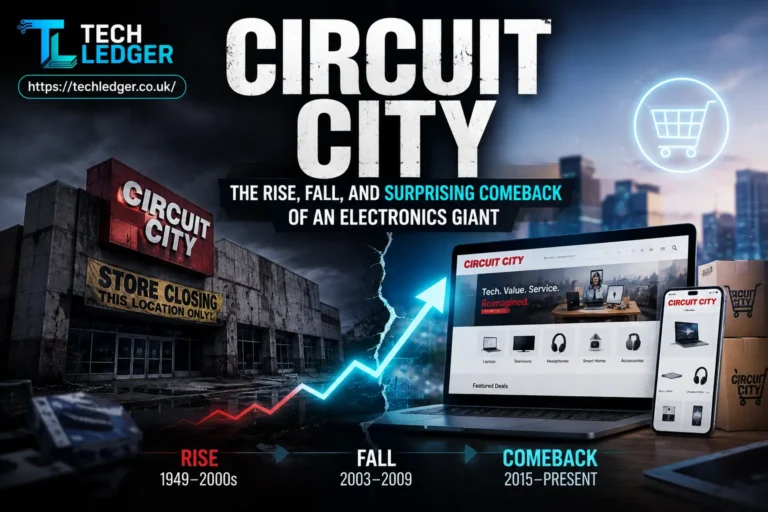
Circuit City’s collapse in 2008–2009 is often taught as a cautionary business school case. The company famously laid off thousands of its most experienced (and highest-paid) sales staff to cut costs, replacing them with cheaper, less knowledgeable workers right as Best Buy was investing in customer service and store experience. The financial crisis simply finished off what bad management had already started.
5. Borders The Company That Outsourced Its Own Future
Borders made one of the most infamous strategic blunders in retail history: in the early 2000s, it handed its entire online bookselling operation over to Amazon, essentially training its biggest future competitor to sell books to its own customers. By the time Borders tried to build its own e-commerce platform, Amazon had already become the dominant force in online books and then in everything else.
6. RadioShack A Brand That Forgot What It Sold
RadioShack once had thousands of stores across the country, but it struggled with an identity crisis. Was it an electronics parts store for hobbyists, or a mobile phone retailer? Confusing store layouts, an inconsistent product mix, and increased competition from big-box electronics retailers and online shopping led to two separate bankruptcies within a few years of each other.
7. Blockbuster Disrupted by the Company It Rejected
Few collapses are as widely discussed as Blockbuster’s, mainly because of one detail: Blockbuster reportedly had the chance to buy Netflix for about $50 million in 2000 and turned it down. A decade later, Blockbuster filed for bankruptcy while Netflix became a streaming giant worth well over $100 billion at its peak. It’s a masterclass in underestimating disruption.
8. JCPenney A Pandemic Pushed It Over the Edge
<cite index=”1-1″>JCPenney filed for bankruptcy in May 2020</cite> after years of declining mall traffic, heavy debt, and struggles to define its brand identity amid competition from both discount retailers and online shopping. The COVID-19 pandemic sealed its fate, but the underlying weakness had been building for close to a decade.
9. Neiman Marcus Luxury Isn’t Bankruptcy-Proof
<cite index=”1-1″>Neiman Marcus, laden with debt after a private equity takeover, filed for bankruptcy protection in May 2020, with its CEO blaming the “unprecedented disruption” caused by the pandemic; the company emerged from bankruptcy months later after eliminating more than $4 billion of debt.</cite> This case proves that even luxury retailers aren’t immune to the same leveraged-buyout trap that sank Toys R Us — high-end branding doesn’t protect a company from a balance sheet that can’t support its debt.
10. Bed Bath & Beyond Lost Identity, Lost Customers
Bed Bath & Beyond’s 2023 collapse followed years of self-inflicted damage: it discontinued its famous 20%-off coupons (a core part of its brand identity), cut inventory in a bid to boost margins, and lost customer loyalty right as competitors like Target and Amazon offered a more consistent shopping experience. It’s a reminder that changing the fundamentals of what made a brand beloved can backfire badly.
11. Party City A Two-Time Bankruptcy Story
Party City filed for bankruptcy in both 2023 and again in 2025, struggling with heavy debt, recurring helium shortages that hurt its balloon business, and an inability to compete with the growing party-supply sections of big-box and online retailers.
12. Saks Global The Newest Name on the List
<cite index=”2-1″>Saks Global, the conglomerate formed after Hudson’s Bay acquired rival Neiman Marcus in 2024 and which owns Saks, Neiman Marcus, and Bergdorf Goodman, filed for bankruptcy in January 2026, marking one of the biggest retail collapses since the COVID-19 pandemic.</cite> It’s a stark reminder that even after surviving one bankruptcy, heavy acquisition debt and a cooling luxury spending environment can bring a retailer right back to the same crossroads.
What These Collapses Have in Common (My Take)
Having looked at a dozen of these stories side by side, I don’t think the biggest retail collapses in U.S. history were really killed by Amazon, or even by the pandemic those were accelerants, not root causes. The real killer, almost every time, was debt combined with delay. Companies that were bought out and loaded with debt (Toys R Us, Neiman Marcus, Saks Global) had no financial flexibility left to modernize even if their leadership wanted to. And companies that avoided heavy debt but delayed adapting to changing consumer behavior (Blockbuster, Borders, RadioShack) got outpaced by competitors who moved faster.
The businesses that survived the same era Walmart, Target, Best Buy didn’t necessarily have better products. They simply reinvested in their stores, built real e-commerce operations early, and kept their balance sheets healthy enough to make long-term bets. That, more than any single trend, is the real lesson buried in these bankruptcies.
Lessons for Today’s Retailers and Business Owners
- Avoid debt that outpaces your growth. Leveraged buyouts look fine on paper until interest payments crowd out innovation.
- Treat e-commerce as core infrastructure, not an afterthought.
- Protect what makes your brand loved. Bed Bath & Beyond’s coupon cuts show how fragile customer loyalty can be.
- Watch disruption before it’s obvious. Blockbuster had the chance to buy Netflix. Most companies get at least one warning sign the key is acting on it.
- Keep enough cash flexibility to survive a shock, whether that’s a recession, a pandemic, or a shift in consumer habits.
Invest in your team and cultivate a culture of adaptability. Empowering employees to embrace change not only enhances morale but also drives innovation from within, allowing your business to pivot more effectively when challenges arise. Communication is key; ensure that every level of your organization understands the vision and is engaged in the mission. Leverage data analytics to gain insights into customer behavior and preferences—this knowledge can inform product development and marketing strategies that resonate more deeply with your audience. Finally, prioritize sustainability; consumers today are increasingly drawn to brands that demonstrate a commitment to social responsibility, making it imperative for retailers to align their practices with the values of their customers.
Frequently Asked Questions
What is the biggest retail bankruptcy in U.S. history?
By assets and historical significance, Sears and Kmart are widely considered among the largest and most symbolic retail bankruptcies in U.S. history, given their size and dominance before their decline.
Why did so many retailers collapse around 2017–2020?
A combination of heavy debt from earlier leveraged buyouts, rising e-commerce competition, and finally the COVID-19 pandemic pushed many already-struggling chains into bankruptcy within a short window.
Are retail bankruptcies still happening today?
Yes. The January 2026 bankruptcy of Saks Global shows that even well-known luxury retailers remain vulnerable to debt and shifting consumer spending.
Final Thoughts
The biggest retail collapses in U.S. history aren’t just sad footnotes in American shopping culture they’re some of the most instructive business stories we have. Each one, from Sears to Saks Global, tells the same underlying story in a different costume: companies fail not because they stop being loved, but because they stop being able to adapt fast enough to stay alive. For anyone building or running a business today, that’s a lesson worth paying attention to. The rise and fall of these retail giants serves as a cautionary tale about the importance of innovation and responsiveness in a rapidly changing marketplace.
Take, for example, the case of Blockbuster, which once dominated the video rental industry. Despite having the opportunity to pivot towards streaming services, its leadership remained anchored in traditional business models, ultimately paving the way for competitors like Netflix to seize the moment. This failure to embrace new technology and consumer preferences wasn’t merely a strategic misstep; it was a profound misunderstanding of the evolving landscape of consumer behavior.
As we analyze the trajectories of these brands, it becomes clear that the ability to anticipate change, coupled with a willingness to embrace risk, is crucial for survival in today’s economy. For entrepreneurs and established businesses alike, the lesson is stark: adaptability is not just an asset; it’s a necessity for thriving in an era defined by disruption.
Read Also: Circuit City: The Rise, Fall, and Surprising Comeback of an Electronics Giant
About the Author