If you’ve searched for “Corrina Jagger,” you’ve probably run into a handful of conflicting stories online — some call her a stillborn infant, others claim she lived for months, and at least one page even invents an entire music career for her. None of that confusion is an accident; it’s what happens when a genuinely sensitive, thinly documented family story gets recycled by content farms chasing search traffic.
At the heart of this muddled narrative lies a tragic reality: Corrina’s brief life, marked by complexity and sorrow, has been overshadowed by sensationalism and misinformation. Those who knew her best are left grappling with the erosion of their memories, as they watch their personal history transform into a caricature for clicks and views. This phenomenon highlights a broader issue in our digital age, where the pursuit of virality often trumps the integrity of genuine stories, leading to a distortion of truth that can be both disheartening and infuriating.
This article takes a different approach. It sticks to what’s actually verifiable, is upfront about what isn’t, and treats the subject — the loss of an infant — with the seriousness it deserves rather than as clickbait. By focusing on factual information and personal narratives, we aim to foster a deeper understanding of the complexities surrounding such a heart-wrenching experience.
This approach not only respects the profound emotional weight of the topic but also encourages open dialogue, allowing parents and families to share their stories without the added pressure of sensationalism. In a world where the loss of life can often be overshadowed by trending headlines, it is crucial to create a space where grief can be acknowledged and validated, paving the way for healing and support.
Who Was Corrina Jagger?
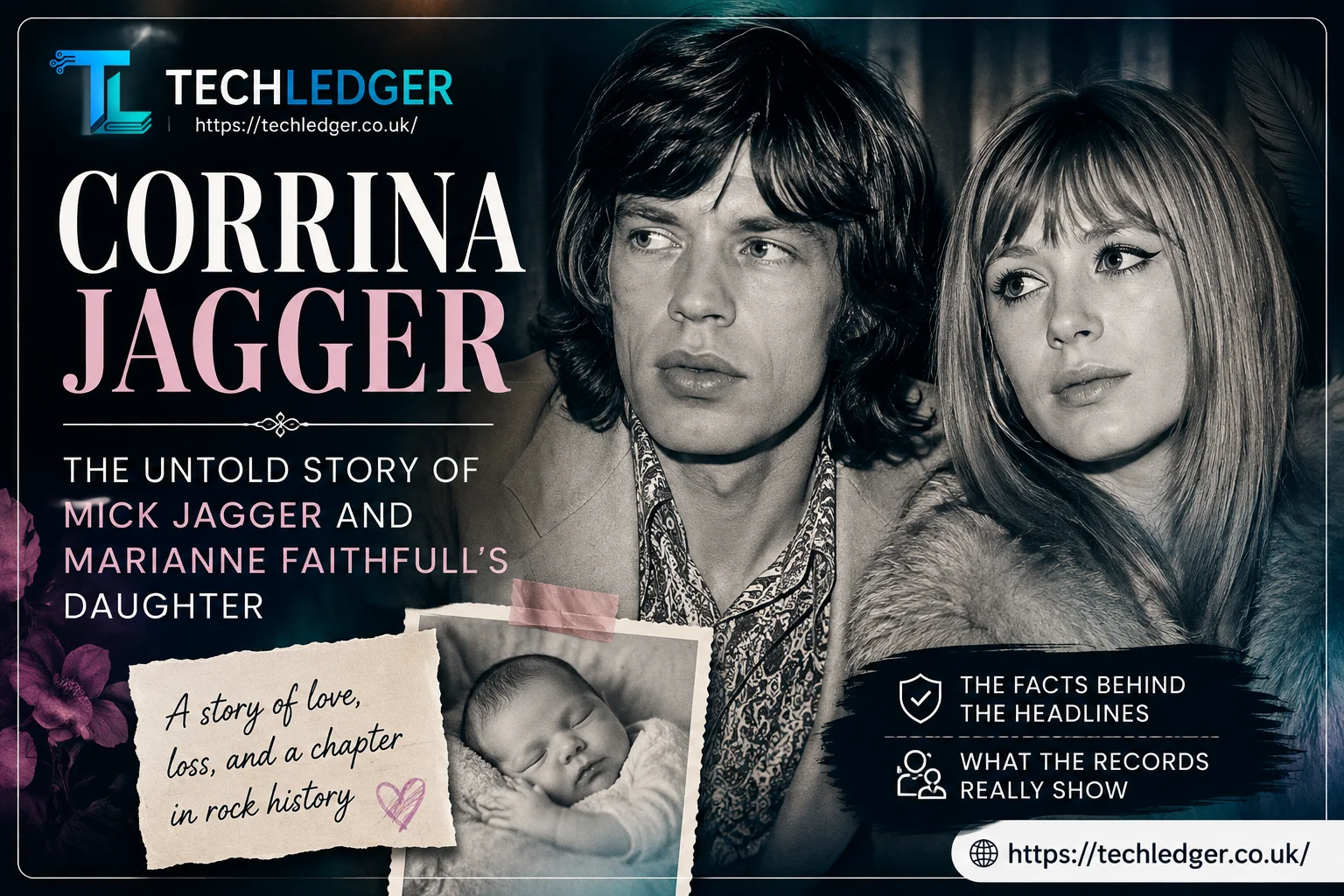
Corrina Jagger (sometimes spelled Corinna Jagger, and occasionally listed as Corrina Faithfull Jagger in genealogical records) was the daughter of Rolling Stones frontman Mick Jagger and singer-actress Marianne Faithfull. Public records and biographical references date her birth to November 1968, during the relationship between Jagger and Faithfull at the height of their fame in Swinging London. Despite her famous lineage, Corrina’s life has remained largely out of the public eye, with little information available about her upbringing and personal endeavors.
Growing up amidst the tumultuous backdrop of her parents’ tumultuous relationship and the vibrant cultural revolution of the 1960s, she was often shielded from the media scrutiny that accompanied her family’s celebrity status. As an adult, Corrina has occasionally been mentioned in interviews and publications, where she expresses a desire to carve out her own identity, distinct from the illustrious shadows of her parents.
According to records that describe her as stillborn at seven or eight months, Corrina did not survive birth. This account is broadly consistent with Marianne Faithfull’s own later reflections on losing a pregnancy in 1968, a period she has spoken about publicly as one of the most painful of her life.
It’s worth being direct about something most of the pages ranking for this topic aren’t: there is no evidence Corrina Jagger grew up, had a public life, released music, or built any kind of career. Any article suggesting otherwise is either confusing her with someone else or fabricating details — likely to pad word count for search rankings. This piece won’t do that.
Why This Story Keeps Resurfacing
Mick Jagger and Marianne Faithfull were two of the most photographed people in the world in the late 1960s. Their relationship was tabloid catnip long before “tabloid catnip” was a phrase anyone used. So even a private family loss became, over time, a footnote that biographers and fans occasionally revisit — usually in the context of trying to understand Faithfull’s later struggles with addiction and mental health, which she has linked in interviews to grief from this period, or in exploring the emotional undercurrents of Jagger and Faithfull’s creative work in the years that followed.
That’s a legitimate area of interest. What’s less legitimate is turning a real infant’s death into a manufactured “tragic celebrity story” complete with invented quotes and dramatized scenes — which is exactly what several low-authority sites currently do.
What the Records Actually Show (and What They Don’t)
Here’s a summary of the verifiable, publicly available information, organized so you can see clearly what’s documented versus disputed.
| Detail | What’s Reported | Reliability |
|---|---|---|
| Parents | Mick Jagger and Marianne Faithfull | Well established across biographies |
| Year | 1968 | Consistently reported |
| Outcome | Stillbirth / death at or near birth | Described in reference records as stillborn at seven or eight months |
| Place of birth | Sometimes listed as Ireland | Disputed by Marianne Faithfull herself |
| Name spelling | Corrina / Corinna | Both spellings appear in different sources |
| Later “career” claims | Music releases, public appearances, fashion presence | Not supported by any credible source — appears to be AI-generated or fabricated content |
Where you see gaps in that table, that’s intentional. Genuine records around a private family loss from 1968 are limited, and any writer claiming detailed, novelistic knowledge of the event is filling in blanks with imagination, not fact.
The Emotional Context: Marianne Faithfull’s Own Account
Rather than speculate, it’s more useful to point to what Marianne Faithfull has said in her own words over the years about this period of her life. She has spoken publicly, including in interviews and her own memoirs, about the toll that losing a pregnancy took on her mental health and about how it coincided with — and likely contributed to — the years of substance use and personal crisis that followed in the early 1970s. Biographers researching the Rolling Stones’ history in this era have frequently pointed to this loss as one thread among several that shaped both her and Jagger’s emotional lives during a famously turbulent chapter of rock history.
This is a more honest and more useful framing than the “tragic secret daughter” angle that dominates search results: not a hidden scandal, but a real, painful loss experienced by two young public figures at a moment when there was very little public language for grief like this, and even less privacy in which to process it.
Why the Misinformation Matters
It’s worth pausing on why some of the current search results are unreliable, because it’s a useful lesson in how modern content mills operate:
- Fabricated biography details. One widely circulating page describes Corrina Jagger as a working musician with “singles” and “collaborative projects” — a claim with no basis in fact, likely generated to make the article seem more substantial.
- Inconsistent timelines. Some pages describe her dying “at seven months” as an infant, others as stillborn, and at least one places her birth in 1970–71 instead of 1968 — a sign the content wasn’t fact-checked against primary sources.
- Emotional exaggeration for engagement. Several articles use dramatic, novelized language about grief and trauma with no sourcing at all, which isn’t reporting — it’s speculative fiction dressed up as biography.
If you’re researching this topic for genealogy, journalism, or general interest, it’s worth cross-checking any claim against a named, citable source rather than trusting aggregator sites.
The Broader Lesson: Fame Doesn’t Protect Against Loss
Setting aside the SEO noise, there’s a genuinely worthwhile reason people search for stories like this one: it’s a reminder that even the most famous, seemingly untouchable public figures experience ordinary human grief. Mick Jagger, in the late 1960s, was arguably the most famous rock musician on the planet. Marianne Faithfull was a celebrated singer and cultural icon in her own right. Neither fame nor wealth changed the reality of losing a child.
That’s arguably the only meaningful “lesson” in this story — not a scandal, not a hidden family secret, just a private tragedy that happened to two public people, at a time when the press offered them little compassion and less privacy.
How This Fits Into Rolling Stones History
For anyone researching the Rolling Stones’ history in the late 1960s, 1968 is usually remembered for the band’s professional highs — the release of Beggars Banquet and Jagger’s ascent as one of rock’s defining frontmen. Biographers and music historians have noted that this same year carried a very different weight in Jagger’s personal life, coinciding with Faithfull’s pregnancy and its loss. It’s a reminder that band timelines built around album releases and tours often leave out the private events happening in parallel, and that the “golden era” of a band can sit right alongside genuinely difficult personal chapters for the people living it.
Marianne Faithfull’s Later Reflections
In interviews and her own writing in the decades since, Marianne Faithfull has been relatively open about how the late 1960s were, for her, defined by more than fame and music. She has described the period following the loss of her pregnancy as one where grief, combined with the pressures of a very public relationship, contributed to the substance use struggles she later became known for confronting.
She rarely dwells on the details of the loss itself in interviews, which is worth respecting rather than treating as a gap to be filled in with speculation. What she has offered publicly is enough to understand the loss as a genuine turning point in her life, without needing invented specifics to make the story feel complete.
Respecting Privacy When the Facts Are Thin
There’s a broader point here for anyone researching public figures’ personal losses: thin documentation isn’t an invitation to fill in the blanks. A stillbirth or infant loss in 1968 was, by the standards of the time, rarely discussed in detail even within families, let alone in the press. That’s precisely why so little verified information exists about Corrina Jagger specifically. Responsible reporting on a subject like this means being clear about that limitation rather than manufacturing a fuller narrative — quotes, career details, or dramatized scenes — simply because a fuller story would perform better in search results.
Frequently Asked Questions
Was Corrina Jagger a real person?
Yes. She was the daughter of Mick Jagger and Marianne Faithfull, born in 1968.
Did Corrina Jagger survive childhood?
No. Available records indicate she was stillborn or died at or shortly after birth in 1968. There is no credible evidence she lived beyond infancy.
Is Corrina Jagger a musician?
No. Claims of a music career or public persona for Corrina Jagger are not supported by any credible source and appear to be fabricated by low-quality content sites.
How many children does Mick Jagger have?
Mick Jagger has several living children from different relationships, born after 1968; Corrina predates all of them.
Why is there so little verified information about Corrina Jagger?
Because she died in infancy in 1968, before any independent public record of her life could exist, and because her parents — understandably — have shared only limited details about the loss over the years.
Final Thoughts
The internet’s version of Corrina Jagger’s story has drifted a long way from the facts, mostly because search-driven content sites prioritize dramatic detail over accuracy. This sensationalism has not only distorted the narrative but also obscured the real issues at play in Corrina’s life issues that deserve nuanced understanding rather than tabloid theatrics.
As we sift through the layers of misinformation, it’s crucial to return to the original sources and voices that shaped her experience, shedding light on the complexities often ignored in favor of a catchy headline. By doing so, we can honor her story not as a mere spectacle, but as a reflection of broader societal challenges and personal resilience.
The real story is simpler and, frankly, more human: a young couple at the peak of global fame experienced the loss of a child in 1968, a loss that Marianne Faithfull has referenced as part of what shaped a difficult period in her life. Treating that with basic respect — rather than turning it into embellished “tragic celebrity” content — is both the more honest approach and, in the long run, the one search engines are increasingly built to reward.
Acknowledging the profound impact of personal tragedy on public figures allows us to see them not just as icons, but as individuals grappling with the complexities of life. Faithfull’s artistic evolution, marked by her hauntingly vulnerable music during that period, reflects a raw authenticity that resonates more deeply than sensationalized narratives ever could. By focusing on the genuine emotions and experiences that shape an artist’s work, we not only honor their journey but also cultivate a more empathetic understanding of the human condition, which is what truly connects us all.
Read Also: Quotela.net Review 2026: The Hidden Downsides of This Quote & Lifestyle Blog
About the Author