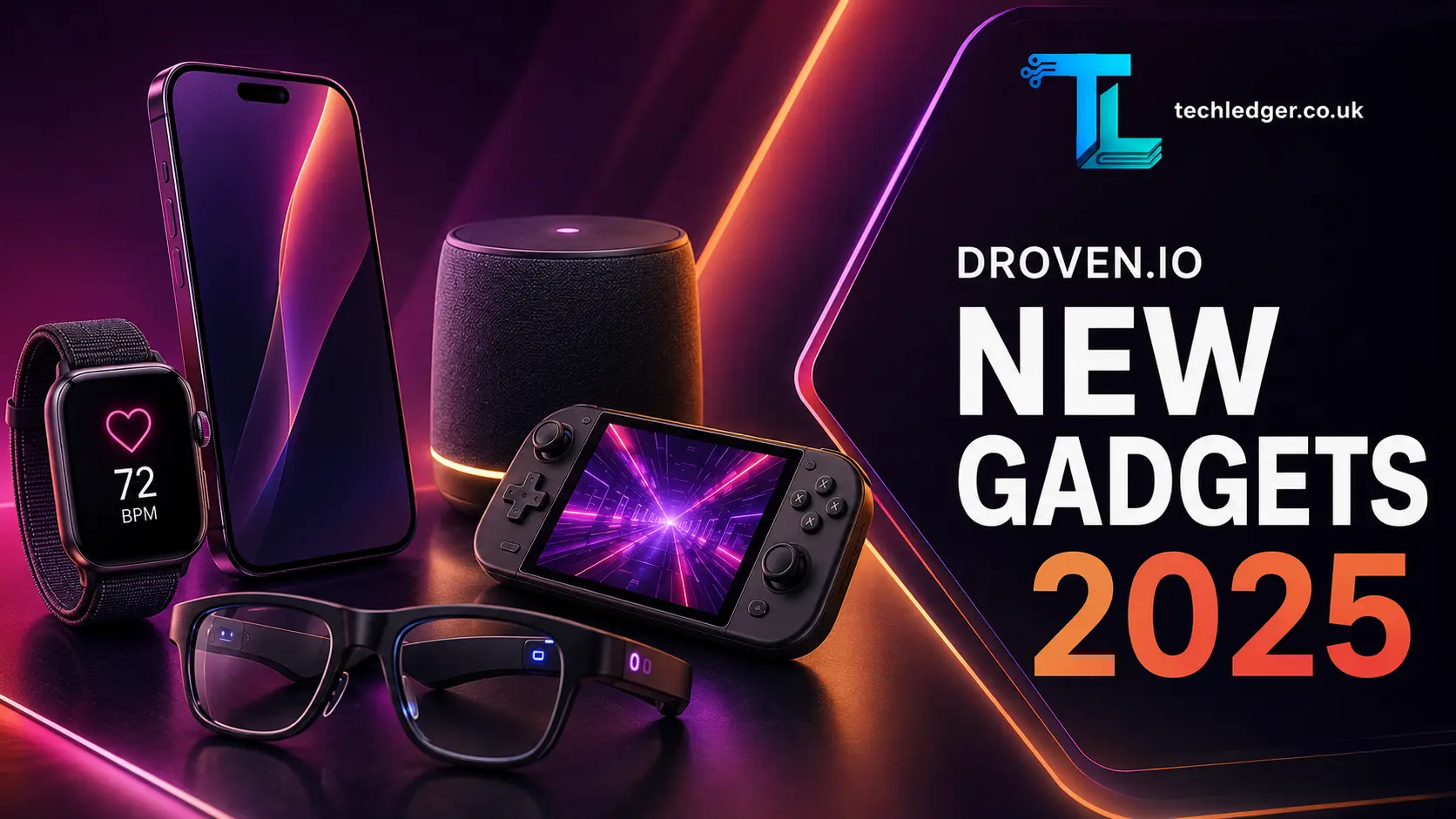
A visual overview of the AI-powered gadgets and smart-device categories that influenced consumer technology in 2025.
The technology released during 2025 did not simply add faster processors or brighter screens. Many devices became more aware of context, more closely connected to artificial intelligence, and better suited to specific daily tasks. This shift led to a surge in personalized experiences, where devices could anticipate user needs and adapt their functionalities accordingly.
For instance, smart home systems learned household routines, adjusting lighting and temperature based on the time of day and individual preferences, while wearables tracked health metrics with unprecedented accuracy, suggesting lifestyle changes in real-time. As a result, technology became not just a tool, but a companion that enriched daily life, fostering a deeper connection between users and their devices. That shift explains the growing interest in droven.io new gadgets 2025 among readers looking for a clear overview of the year’s most notable technology.
The phrase refers to Droven.io’s coverage of new gadgets and smart-device trends rather than one official product collection carrying the Droven.io name. This broad approach allows Droven.io to explore a diverse array of innovations, from cutting-edge wearables to home automation systems, thereby providing readers with insights into how these technologies can enhance everyday life. By focusing on the latest trends and developments, Droven.io aims to keep its audience informed and engaged, promoting a deeper understanding of how emerging devices can shape the future. Its technology coverage includes AI, automation, consumer devices, software, and emerging digital tools. Readers searching for the term are generally trying to discover which innovations defined 2025 and which features may still be valuable.
What Does Droven.io New Gadgets 2025 Mean?
Droven.io is a technology information website covering areas such as artificial intelligence, digital transformation, software, cybersecurity, and gadget reviews. With a commitment to delivering the latest insights and trends, Droven.io offers in-depth articles, expert analyses, and practical guides designed to help both tech enthusiasts and industry professionals navigate the rapidly evolving digital landscape. Therefore, “new gadgets 2025” describes the devices and trends discussed or associated with its technology coverage.
It should not be treated as the name of a gadget manufacturer or retail range. The most useful way to understand the topic is as a guide to the important consumer technologies that gained attention during 2025. These included AI-assisted smartphones, health-focused wearables, smart glasses, portable gaming systems, home automation products, and energy-conscious devices.
A Quick Look at the Major Gadget Categories
| Gadget category | Important 2025 development | Best suited for | Main consideration |
|---|---|---|---|
| AI smartphones | More contextual, on-device assistance | Everyday users and professionals | Privacy and software support |
| Smart glasses | Cameras, audio, displays, and AI interaction | Travelers, creators, and early adopters | Comfort and social privacy |
| Health wearables | Deeper sleep and wellness insights | Fitness and health-conscious users | Medical limitations |
| Portable gaming | Improved displays and stronger performance | Home and mobile gamers | Game and accessory costs |
| Smart home devices | Better automation and energy control | Families and homeowners | Ecosystem compatibility |
| AI computers | Faster local AI processing | Students, creators, and office workers | Real benefit over older hardware |
| Eco-conscious gadgets | Efficient power use and recycled materials | Long-term buyers | Repairability and durability |
AI Smartphones Became More Context-Aware
Artificial intelligence became a central part of smartphone marketing in 2025. Instead of existing only as a separate chatbot, AI began appearing throughout the device experience. It could help summarize information, organize notes, edit photographs, interpret spoken requests, and perform actions across supported applications.
Samsung’s Galaxy S25 series was one prominent example. Samsung positioned the phones around a more personalized, context-aware mobile experience. The development showed where the wider market was heading: a smartphone would no longer wait for a carefully worded command but attempt to understand the user’s broader intention.
However, the usefulness of an AI phone depends on more than promotional demonstrations. Buyers should check whether important features work in their language and region, whether processing happens locally or in the cloud, and whether the functions require a paid subscription later.
Smart Glasses Moved Closer to Everyday Use
Smart glasses had existed for years, but their designs often felt experimental. During 2025, the category moved closer to ordinary eyewear. Manufacturers began to prioritize aesthetics alongside functionality, blending cutting-edge technology with stylish frames that could easily fit into everyday life. This shift not only attracted tech enthusiasts but also appealed to a broader audience, including fashion-conscious consumers who might have previously shunned wearable tech. As a result, smart glasses evolved into accessories that complemented personal style while offering features like augmented reality overlays, navigation assistance, and even health monitoring. Improved cameras, longer battery life, voice interaction, translation tools, speakers, and visual displays made the products more practical.
Meta introduced the Ray-Ban Meta Gen 2 glasses with upgraded video capture and longer typical battery life. It also unveiled Meta Ray-Ban Display, which paired an in-lens display with a wrist-worn control device. These developments demonstrated two different directions: discreet glasses that blend into daily life and more advanced models that place information inside the user’s field of view.
Privacy remains an important concern. A product may be technically impressive but still feel uncomfortable in social settings if people cannot easily tell when its camera is active. Buyers must consider etiquette alongside specifications. Moreover, as technology becomes increasingly integrated into our daily lives, the distinction between personal space and public visibility blurs.
Consumers are now faced with the challenge of balancing convenience with the potential for intrusive surveillance. This calls for manufacturers to prioritize transparency in their designs, ensuring that users and those around them can easily discern when recording is taking place. As society grapples with these issues, fostering an open dialogue about acceptable use and the implications of emerging tech will be crucial in shaping a future where privacy and innovation coexist harmoniously.
Wearables Focused More Heavily on Health
Wearables continued moving beyond basic step counting. Watches and rings became more interested in sleep quality, recovery, heart-related trends, stress, temperature changes, and long-term wellness patterns.
Apple Watch Series 11, for example, introduced features such as sleep scoring and notifications related to possible signs of hypertension, along with longer battery life. These additions reflected an industry-wide effort to turn wearable data into information that is easier for ordinary users to understand.
Such tools can encourage healthier habits, but they should not be confused with professional diagnosis. Accuracy varies by feature, physical condition, device fit, and regulatory availability. A wearable can identify a pattern worth discussing with a qualified medical professional; it cannot independently settle a serious health question.
Portable Gaming Received a Major Upgrade
The Nintendo Switch 2 was one of the most recognizable gadget releases of 2025. It retained the flexible handheld-and-TV concept of the original system while adding a larger 1080p display, stronger performance, and support for higher-resolution output when connected to a compatible television.
Its arrival showed that portability does not have to mean a heavily reduced experience. Players increasingly expect handheld devices to move smoothly between travel, personal play, and a larger home display. This evolution in gaming technology signifies a shift in how developers approach design, optimizing both hardware and software to ensure that players can enjoy rich, immersive worlds without compromise. As these devices become more powerful, the line blurs between traditional console gaming and portable platforms, allowing for seamless transitions between solo adventures on the go and multiplayer experiences at home.
A console’s initial price tells only part of the story. Games, storage, controllers, subscriptions, protective cases, and replacement accessories can substantially increase the total cost. Anyone comparing gaming gadgets should calculate the likely expense over several years rather than looking at the console alone.
Smart Home Gadgets Became More Practical
The most useful smart-home products of 2025 were often the least dramatic. Connected thermostats, security cameras, video doorbells, lights, plugs, robot vacuums, and leak sensors continued to improve routine household management.
The real value of these gadgets comes from automation. A thermostat that changes its schedule, a light that switches off when a room is empty, or a sensor that warns about a water leak can solve a genuine problem without demanding constant attention.
Compatibility is still a common source of frustration. A buyer may discover that a new device requires another hub, does not support the preferred voice assistant, or provides only limited functionality without a subscription. Checking the ecosystem and ongoing costs before purchasing can prevent an expensive mistake.
AI Computers Promised Faster Local Processing
AI-capable laptops became another major technology theme. These computers included hardware designed to handle certain artificial intelligence tasks on the device rather than sending every request to remote servers. This shift not only improved processing speeds but also enhanced privacy, as sensitive data could be processed locally without the need for external transmission. Manufacturers began incorporating specialized chips, such as neural processing units, to optimize machine learning applications, enabling features like real-time language translation and advanced image recognition directly on the device. As a result, users experienced a significant boost in productivity and creativity, allowing them to leverage AI tools seamlessly in their daily tasks without relying on constant internet connectivity.
Local processing can improve response time and may reduce the amount of personal information transmitted online. It can also support background effects, transcription, image tools, document assistance, and other optimized features without relying entirely on an internet connection.
The phrase “AI PC” alone does not guarantee a worthwhile upgrade. Someone who mainly browses websites and writes basic documents may notice little difference. Creators, developers, researchers, and professionals using compatible AI applications are more likely to benefit from specialized hardware.
Battery Life Became as Important as Intelligence
An advanced gadget loses much of its value when it constantly needs charging. Manufacturers responded by improving chip efficiency, charging speed, power management, and battery performance across phones, computers, glasses, watches, and portable gaming devices.
Real battery life can differ significantly from advertised figures. Screen brightness, mobile connectivity, camera use, AI processing, gaming, background applications, and temperature all affect endurance.
For a practical comparison, buyers should look for independent testing that resembles their own routine. A device lasting all day under light use may perform very differently when recording video, navigating, or running demanding software.
Sustainability Entered More Buying Decisions
Environmental considerations gained a more visible place in product design. Some manufacturers increased their use of recycled materials, reduced packaging, improved energy efficiency, or extended software support.
Still, sustainability cannot be judged by one recycled component. A gadget that lasts five years, receives security updates, and can be repaired may create less waste than a supposedly greener device that must be replaced after two years.
Buyers can make a meaningful difference by keeping devices longer, choosing dependable products, trading in old electronics responsibly, and avoiding upgrades that provide no practical improvement.
How to Choose the Right Gadget
The best gadget is not necessarily the newest or most expensive one. It is the device that addresses a real need without creating unnecessary cost, complexity, or privacy risk.
Before purchasing, ask these questions:
- What regular problem will this device solve?
- Does it work with the products I already own?
- Which features require an internet connection?
- Is a subscription necessary?
- How long will the manufacturer provide updates?
- Can the battery or damaged parts be repaired?
- What personal information does the gadget collect?
- Are independent reviews consistent with the advertising?
Waiting a few weeks after release can also be helpful. Early reviews may reveal heat problems, software bugs, weak batteries, or missing features that were not obvious during the announcement.
Are 2025 Gadgets Still Worth Buying?
Many 2025 devices can remain sensible purchases, particularly when they receive long-term software support and are available at a reduced price. A well-supported phone, watch, laptop, or console does not suddenly become useless when a newer model arrives.
Value depends on condition, warranty, compatibility, repair options, and the size of the discount. A small price reduction may not justify losing an extra year of software support, while a substantial discount on a dependable product could make it better value than its successor.
The broader lesson from droven.io new gadgets 2025 is that useful technology was becoming less about isolated specifications and more about how hardware, software, AI, and services worked together. Buyers who focus on lasting usefulness are more likely to find a device they will still appreciate years later.
Frequently Asked Questions
What are droven.io new gadgets 2025?
The phrase refers to Droven.io-related coverage of the smart devices and consumer technology trends that attracted attention in 2025. It is not an official Droven.io product line.
Which gadget categories were important in 2025?
AI smartphones, smart glasses, health wearables, portable gaming systems, AI computers, and practical smart-home products were among the leading categories.
Were AI gadgets worth buying in 2025?
Some were valuable for specific tasks, but usefulness depended on software support, privacy, compatibility, and whether the AI features solved a genuine problem.
Can health wearables replace a doctor?
No. A wearable can provide wellness information and highlight possible trends, but it should not replace professional medical evaluation or treatment.
What should buyers check before purchasing a smart gadget?
Buyers should examine compatibility, battery performance, privacy policies, subscriptions, warranties, repairability, independent reviews, and the expected period of software support.
Conclusion
The most significant gadgets of 2025 brought intelligence into products people already used: phones, watches, glasses, computers, consoles, and household devices. Their strongest features reduced effort, improved access to information, or made routine tasks easier.
Not every innovation offered equal value, though. The smartest approach is to look beyond excitement and consider usefulness, security, support, and total ownership cost. That perspective turns a fashionable gadget into a thoughtful long-term purchase.
About the Author